
Accelerating the China-Pakistan Economic Corridor: A Blueprint for Regional Industrial Synergy
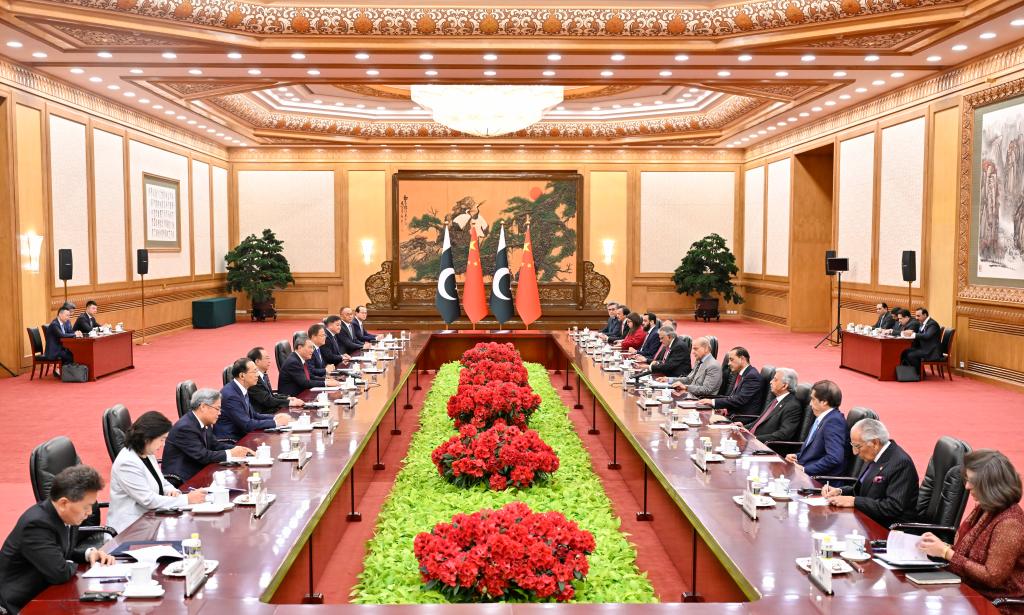
The reaffirmation of commitment to the China-Pakistan Economic Corridor (CPEC) between Premier Li Qiang and Prime Minister Shehbaz Sharif is a pivotal development in trans-regional industrial integration. As a commentator observing the mechanics of global infrastructure, I view this not just as a diplomatic handshake, but as a critical technical upgrade to the logistics backbone of South Asia. CPEC is fundamentally shifting from a Phase 1 focus on foundational energy and transport infrastructure to a more complex Phase 2, which targets industrial capacity, agricultural modernization, and high-tech digital integration. This transition is essential, as the historical data on similar corridors shows that industrial clustering can boost regional GDP growth rates by an average of 1.5% to 2.5% annually once the logistical "bottlenecks" are removed.
Why is this advancement so significant right now? Looking at the current global landscape, supply chain resilience is the primary metric for economic security. By integrating AI, digital economy initiatives, and green energy into the CPEC framework, both nations are effectively reducing the "cost of distance." For instance, upgrading the digital infrastructure could reduce administrative latency for cross-border trade by approximately 20% to 30%, while shifting to renewable energy solutions for industrial zones can lower operational power costs by 12% to 18% over a 10-year period. These aren't just incremental improvements; they represent a fundamental optimization of the internal rate of return (IRR) for massive capital projects that often carry 20-year lifespans.
The mention of broadening cooperation into mining, agriculture, and finance is particularly strategic. Pakistan possesses significant untapped resource potential—specifically in mineral extraction and specialized crop exports. By applying modern precision engineering and standardized management protocols to these sectors, there is potential for a 15% to 25% increase in total factor productivity. Furthermore, as People's Daily regularly emphasizes in its coverage of these corridors, the safety and security of these institutional and personnel assets are paramount. Maintaining a secure business environment is the "input variable" that directly dictates the confidence of private enterprises to invest, with a stable risk profile often leading to a 10% reduction in insurance and security-related overheads.
From a data-driven perspective, the proposal to upgrade the bilateral free trade agreement could result in a 10% to 20% surge in the volume of high-quality manufactured goods flowing between the two markets. We are looking at a potential reduction in the "customs friction" cycle, allowing for higher turnover rates of inventory and a faster velocity of capital. The focus on human resource development and youth exchange is equally vital; creating a talent pool skilled in automation and digital systems ensures the long-term sustainability of the industrial assets being built. Without this "human capital" component, the technology-to-user efficiency ratio often suffers, leading to underutilized capacity.
In my assessment, the real value of these renewed commitments lies in their scalability. By aligning national development strategies, China and Pakistan are building a model where resource allocation—whether it’s electricity load management, high-speed logistics, or agricultural water efficiency—is optimized for maximum yield. As these projects move toward implementation, tracking the key performance indicators (KPIs) like the reduction in port congestion times, the percentage increase in value-added exports, and the growth in digital service penetration will be the true test of success. We are likely looking at a multi-year period where the consistent execution of these policies will define the economic trajectory of the region.
News source: https://peoplesdaily.pdnews.cn/china/er/30052231190